The Technology That Will Quietly Reshape Everything
You know what's funny about transformative technology? It never announces itself.
No one woke up in 1995 and said, "The internet will fundamentally restructure human communication, commerce, and society." It just... happened. Gradually. Then suddenly. And by the time we realized what was happening, the social and political implications were already baked into the cake.
Identity verification technology feels like that.
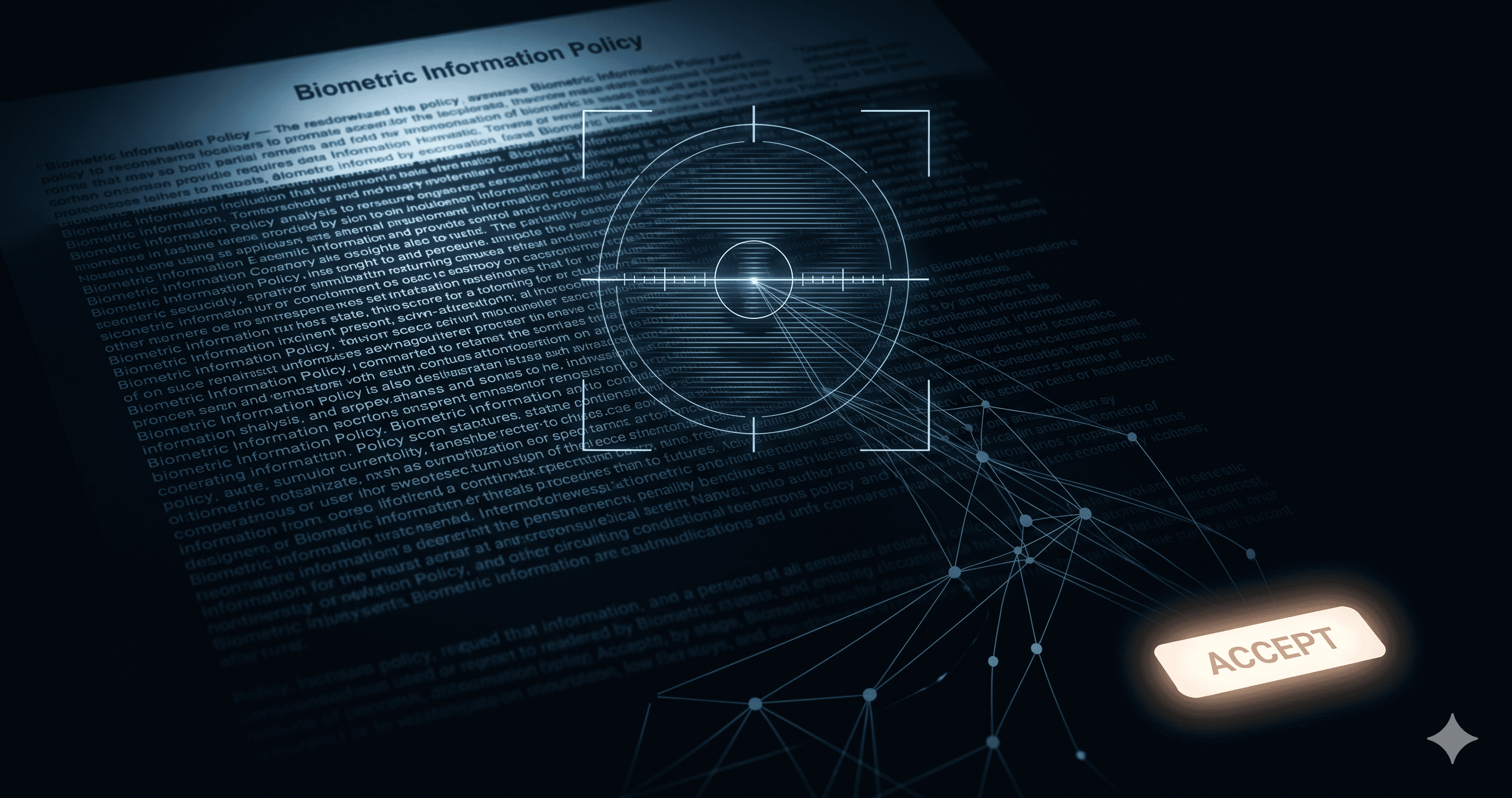
On the surface, it's boring infrastructure. Nobody gets excited about KYC (Know Your Customer) compliance or biometric authentication. But take a step back, and you realize: this is the authentication layer for the next 20 years of human society. And the way we build it now, the choices we make about privacy, centralization, and data governance, could reshape everything from how we access social media to how governments exercise power.
We're at an inflection point. Let me show you both sides of this coin.
The Case For: Identity Verification as a Public Good
The Real Problems It Solves
Let's start with the genuine problems identity verification addresses, because they're legitimate:
1. The Bot & Fake Account Crisis
Social media has become unmanageable. Facebook alone has billions of fake accounts. On Twitter, estimates suggest 15-20% of accounts are bots. These aren't just spam, they're:
Spreading misinformation at scale
Harassing vulnerable people with impunity
Manipulating elections and public opinion
Enabling scams and financial fraud
As one Redditor in the discussion put it: "Social media should be ID verified. Would solve many issues with bots and anonymous hate."
This isn't wrong. A verified identity layer would dramatically reduce coordinated harassment, bot networks, and anonymous abuse.
2. Financial Crime & Fraud
Identity fraud cost Americans $20+ billion in 2024. Money laundering, terrorist financing, and synthetic identity fraud are growing faster than the systems designed to stop them.
Mandatory identity verification for financial transactions isn't just compliance theater, it actually prevents real harm. A robust identity verification system makes it exponentially harder for criminals to hide.
3. Trust in Digital Marketplaces
When you sell something online, buy from a stranger, or hire a contractor, you're taking a risk. Not knowing if the person on the other end is real introduces friction and danger.
Identity verification solves this. It turns digital interactions from anonymous transactions (which breed distrust) into trusted exchanges between verified humans.
The Optimistic Scenario: With proper identity verification, social media becomes a place where people are accountable for what they say. Harassment drops. Misinformation spreads slower. Financial crime becomes riskier. The internet has become more civilized.
This is the best-case version of this technology.
The Case Against: Identity Verification as Mass Surveillance Infrastructure
Why the Optimistic Scenario Is Naive
Here's the thing: building identity verification infrastructure is building surveillance infrastructure.
And history teaches us that once you build the capability for surveillance, it always gets used. Not just for the good purposes. For everything.
The Australia Precedent
In 2023, Australia proposed legislation that would require social media users to verify their identities. The stated purpose? Protect children and reduce online harms.
Reasonable, right?
But security experts immediately pointed out the danger: this creates a digital identity registry that can be weaponized. Want to track protesters? You now know who they are. Want to suppress political dissent? You can identify opposition voices. Want to monitor vulnerable populations? You have the infrastructure to do it.
Australia's proposal was shelved, but the idea didn't die. It just went quiet.
The Real Risk: Function Creep
This is how surveillance systems work in practice:
Initial purpose: "We need this to reduce fraud and protect children"
Political pressure: "We need this to track financial crime"
Emergency: "We need this to identify terrorists"
Normalization: "We need this to track anyone who breaks any law"
Total visibility: "We now have complete records of who said what, when, and to whom"
Each step feels reasonable individually. Combined, they create a panopticon.
The Asymmetric Power Problem
Here's what most people don't think about: identity verification isn't neutral. It empowers whoever controls the system.
Governments get real-time knowledge of who's organizing, protesting, or dissenting
Large corporations get the ability to profile, manipulate, and control behavior
Authoritarian regimes get the perfect tool for political suppression
Meanwhile, ordinary people lose the ability to:
Express unpopular opinions anonymously
Explore controversial ideas privately
Organize politically without surveillance
Speak truth to power without retaliation
One commenter captured this perfectly: "Anonymous social media delivers more societal harm than societal benefits."
But the cure might be worse than the disease.
The Nuance Everyone's Missing: It's Not Binary
The real tension here isn't identity verification vs. no identity verification. It's how we build it.
The "Two-Branch Internet" Idea
One proposal from the Reddit discussion deserves serious attention:
"We should have a two-branch internet. For things you normally need ID for (banking, etc), you use the identity-verified layer. For the rest of it, the internet we know and love."
This actually makes sense. You don't need verified identity to:
Post a meme
Join a hobby community
Discuss politics
Read news
Create art
But you do need verified identity to:
Conduct financial transactions
Access sensitive records
Purchase regulated products
Prove professional credentials
The key insight: segregation by use case, not universal surveillance.
This would let us get the benefits of identity verification (fraud prevention, accountability in high-stakes situations) without building a comprehensive surveillance infrastructure.
What Would That Require?
Decentralized, Privacy-Preserving Architecture:
Instead of a central database of every person's verified identity, use cryptographic proofs
Users control their identity data, not corporations or governments
Verification happens in zero-knowledge (proving you're over 18 without revealing your birthdate)
No central registry for governments or companies to exploit
Real Technical Implementation:
Self-sovereign identity systems (blockchain-based or similar)
Selective disclosure (prove specific attributes without exposing entire identity)
Local verification (your bank verifies you, but doesn't tell the government)
User-controlled data
This isn't science fiction. The technology exists. It's just not deployed at scale because:
It's more complex than centralized databases
Governments prefer centralized surveillance
Corporations prefer comprehensive data collection
The Uncomfortable Truth: We'll Probably Get Both
Here's what I think will actually happen in the next 20 years:
The "Benefits" Layer: Identity verification will become standard for high-friction transactions (financial services, age-gated content, regulated access). This will genuinely reduce fraud and make digital commerce easier.
The "Surveillance" Layer: Governments and corporations will absolutely use this infrastructure beyond its original purpose. China's digital ID system (which is already rolled out) shows the path forward—total integration of identity verification with social credit scoring, financial control, and political suppression.
Even in liberal democracies, the infrastructure will enable:
Mass profiling based on online behavior
Targeted enforcement against dissidents
Creeping control of expression
Asymmetric power for institutions vs. individuals
The Rationalization: It will all be framed as "necessary for security" or "protecting children" or "preventing misinformation." Each expansion of surveillance will feel justified in the moment.
What Should We Do?
If You're Building This Technology:
Ask hard questions about how your system will be misused
Design for privacy from the start (not as an afterthought)
Implement strong data minimization (collect only what's necessary)
Build in user control (people should own their identity data)
Create transparency mechanisms (log access, make it auditable)
Push back on expansion (resist pressure to add "just one more use case")
If You're Policymaking:
Separate verification layers (high-stakes vs. general use)
Require privacy-first architecture (default to minimal data collection)
Implement strong oversight (independent audits of identity systems)
Build in sunset clauses (emergency powers should expire)
Enshrine user rights (data ownership, deletion, portability)
If You're Just Using the Internet:
Understand the tradeoffs (convenience vs. privacy isn't free)
Demand transparency (know how your identity data is being used)
Support decentralized alternatives (vote with your time and attention)
Stay politically engaged (identity infrastructure will be decided by lawmakers, and most aren't paying attention)
The Bottom Line
Identity verification technology will reshape trust, accountability, and society over the next 20 years. This isn't speculation, it's already happening.
The question isn't whether we'll use it. We will. The question is how we build it.
If we get it right, decentralized, privacy-preserving, user-controlled, it could make digital interactions safer and more trustworthy without sacrificing anonymity where it matters.
If we get it wrong, centralized, surveillance-first, corporatized, it will become one of the most powerful tools for control ever created. And by the time we realize what happened, the infrastructure will be so embedded that changing it will be nearly impossible.
We're not there yet. We still have choices.
The question is: what will you choose?
About the Author
Hamza Khan builds the systems this article warns you about. He's a Product Manager in identity verification and AML who once spoofed AWS Rekognition's anti-spoofing with a $2 nylon mask. He writes here because the people building this infrastructure should be the most unsettled by it.
Depth over frequency
Enjoyed this article?
Essays on AI, trust, and building — when they're ready, not before.